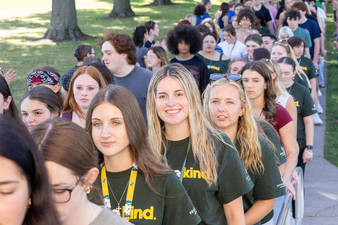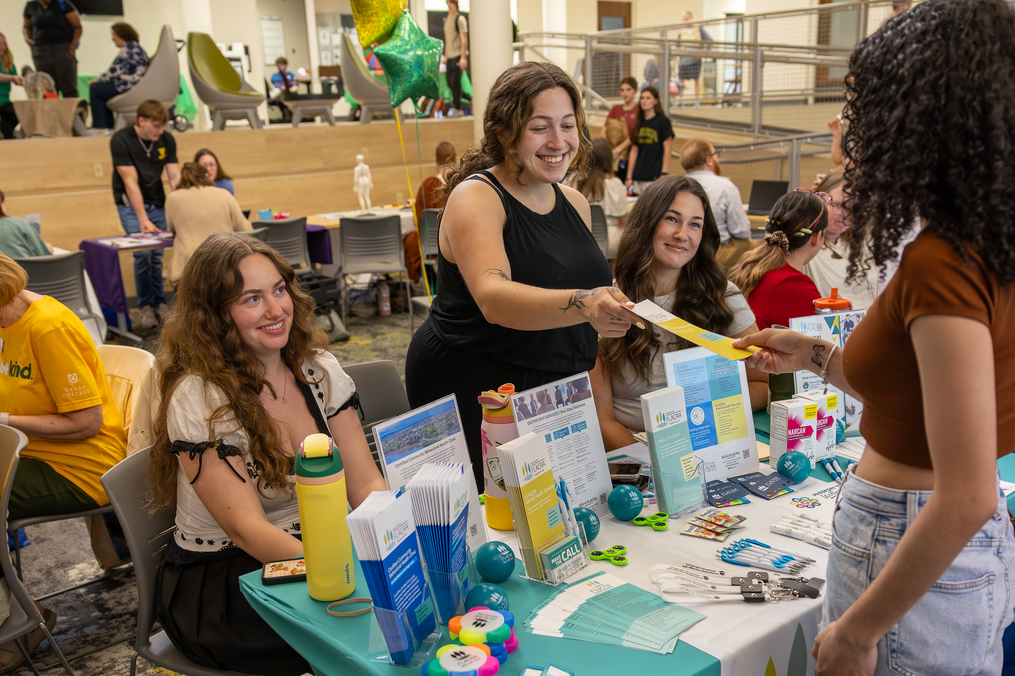
Keuka College students were entertained, challenged, and inspired in both lighthearted and meaningful ways on Wednesday, April 15, during the College’s Passport to Wellness. The daylong initiative highlighted the eight dimensions of wellness through dozens of activities and presentations led by faculty, staff, outside experts, and, in many cases, students themselves.
Sophomore Lizzy Lascari, a unified early childhood education major, staffed the PRIDE Club booth in the Dahlstrom Student Center, where she offered advice on setting healthy boundaries in workplace and personal relationships. Students spun a wheel to land on boundary-challenging scenarios.
“The students have been surprised with how realistic the questions are,” said Lizzy. “They were expecting more upbeat questions, but we tried to make it realistic because this is a really good work–life skill to have.”
Down the hall, Health and Counseling Center Director Kristin Bray invited students to reflect at a display titled “Things I Love About Myself.” Sticky notes filled the board with affirmations such as “I love my creativity,” “I love my positive outlook on life,” and “I love my hair.”
Nearby, first-year student Sam Teeter, a unified childhood special education major from Webster, N.Y., received a temporary butterfly tattoo at a body-positivity booth station from Mental Health Counselor Brandi Sears. The tattoos, Brandi said, symbolized kindness to one’s body and a rejection of self-harm and negative thoughts. Other displays encouraged students to rethink labels and embrace natural appearances.

“The idea is to make it fun and interactive. The students seem excited about what we’re doing.”
Sam agreed.
“It’s interesting to get to see what the campus has to offer,” she said. “It’s nice that the College does events like this.”
In the Hawkins Lounge, students explored additional resources, including a booth hosted by the Penn Yan–based Finger Lakes Area Counseling and Recovery Agency (FLACRA). Its peer-led Connections project featured an interactive “Tree of Hope,” where students painted leaves representing personal challenges such as loneliness, substance use, and self-harm.
“This really connects with the students,” said FLACRA Recovery Center Supervisor Julie Coleman. “It helps them to identify that other people might have some of the same struggles.”
As a member of the committee organizing the Dr. BettyLou Koffel ’74 Film Series screening of “Baseball Behind Barbed Wire” last night, sophomore W.G. Warner was both a Passport to Wellness attendee and host.
“I’m looking forward to taking advantage of the events,” he said before setting off for the screening.
The film, followed by a Q&A with the director, highlighted the role baseball played in helping Japanese Americans interned in the U.S. during World War II to maintain a sense of community and dignity.
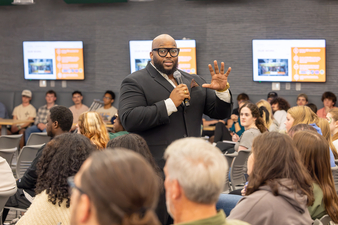
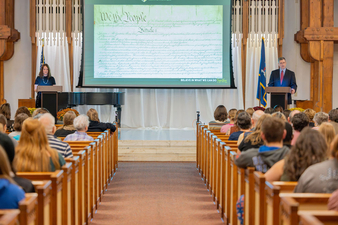
The day also featured a keynote address by author and speaker Dallin Cooper, who encouraged students to examine their assumptions when navigating difficult relationships. Animated and entertaining, Dallin outlined the importance of questioning and overcoming personal assumptions when navigating difficult personal or workplace relationships.
Among his strategies:
Recognize “They Might Not” moments – those opportunities to consider that an opponent might not be operating from assumed motives.
Understand the backfire effect, the tendency for people to double down on their beliefs when confronted with contrary evidence. “No one changes by being yelled at,” he said.
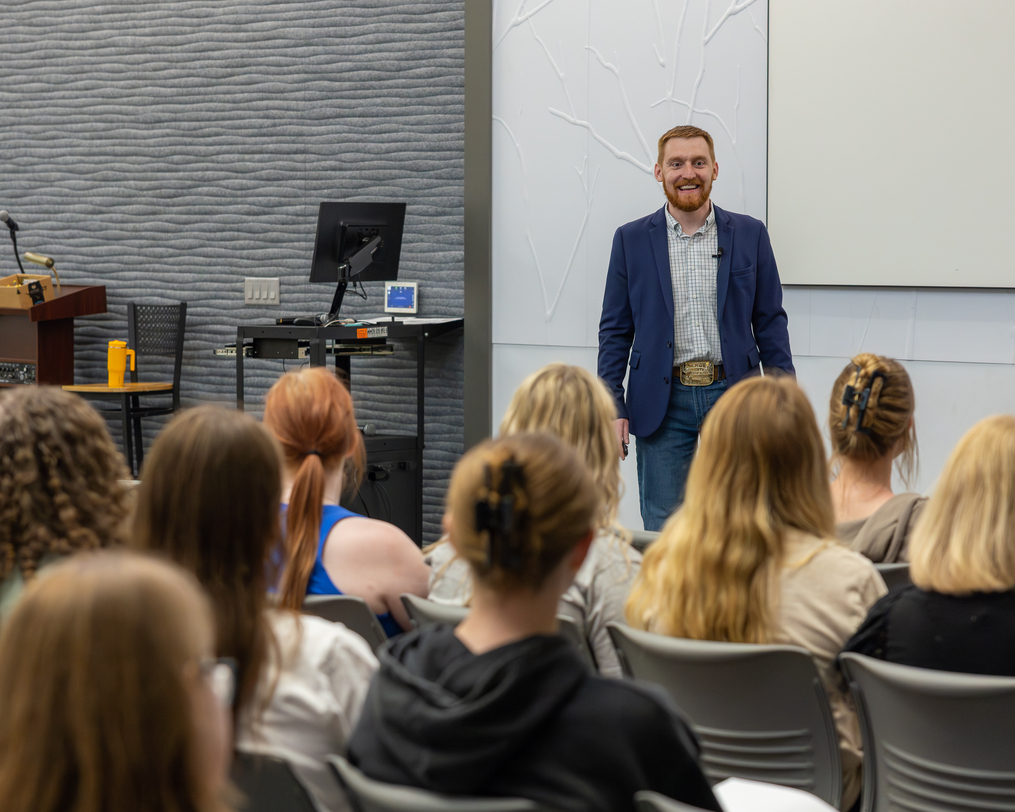
Nationally known author and speaker Dallin Cooper gave a lively keynote address focused on challenging audience members to rethink how they approach disagreement, conflict, and understanding others.
To learn what someone is thinking, set aside assumptions and simply ask them. Then, truly listen.
“Dallin Cooper’s keynote challenged our community to examine the assumptions we all carry into our relationships,” said Associate Vice President for Experiential Education & Wellness Dr. Carrie Roberts, a Passport to Wellness organizer. “His message reinforced that effective communication is not just a workplace skill, but a vital component of personal wellness and community belonging.”
First-year student Zaarah Ishak, a social work major from Long Island, agreed, giving Dallin high marks for tackling tough issues in a relatable way.
Now in its fourth year, the once-a-semester Passport to Wellness continues to grow in breadth and participation.
“What made Passport to Wellness Day so powerful was the way experiential learning and wellness came together,” said Dr. Roberts. “Students were engaging, reflecting, and building habits that support their personal, academic, and professional lives.”
Looking ahead, President Amy Storey recently announced that future Passport to Wellness days will be fully dedicated to wellness programming.
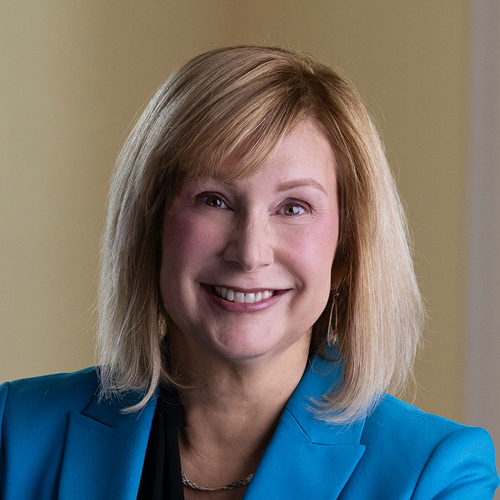
“Rather than holding regular classes, students will spend the day building skills across the eight dimensions of wellness. I urge all faculty members to strongly encourage student attendance at sessions that most closely connect with your curriculum.”